What does “backlit” mean on a bathroom mirror listing?
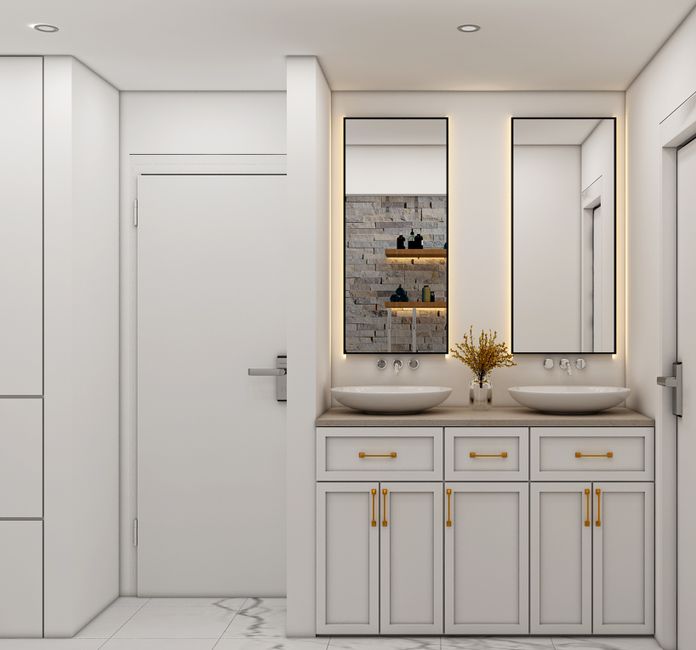
On a bathroom mirror listing, “backlit” means the mirror has light sources fitted behind its what size mirror above vanity reflective surface. The light shines out around the edges or through a translucent section of the mirror, creating a soft glow on the wall behind it. That effect is often described as a halo glow wall.
Backlighting can make a bathroom feel brighter, calmer and more considered without changing its layout. For a landlord deciding between a simple refresh and a full renovation, it can be one of the most visible upgrades for relatively little disruption. But it is important to understand what backlighting does—and what it does not do—before choosing a mirror.
This guide explains the terminology, how to assess a mirror for everyday tenant use, what to check before ordering and how to plan the fitting without letting a straightforward refresh grow into unnecessary plumbing or tiling work.
What “backlit” means in practice
A backlit mirror contains LEDs behind the mirror panel. They cast light backwards onto the wall, so the light source is usually hidden from direct view. Depending on the design and wall clearance, the result may be a subtle outline or a stronger halo around the mirror.
Listings sometimes use related terms such as “rear-lit”, “LED backlit” or “halo illuminated”. They broadly describe the same arrangement, though brightness, light distribution and controls vary between products. Check the product photographs and specification rather than relying on the label alone.
Backlit versus frontlit
A frontlit mirror directs light forwards, often through a frosted strip or illuminated sections around the face of the mirror. This puts more light onto the person standing at the basin. A backlit mirror directs more light onto the wall and into the room, creating ambient bathroom light rather than a strong, direct beam.

Some mirrors combine both types of lighting. If the listing says “frontlit and backlit”, confirm whether the two settings can be controlled separately. A beautifully lit mirror can still be frustrating if it provides too little useful light for shaving, applying make-up or other close-up tasks.
Is backlighting enough for a bathroom?
Usually, it is best treated as supplementary lighting, not the bathroom’s only light source. Backlighting makes the room feel more welcoming and can reduce the hard, flat look of a single ceiling light. However, because much of the light is reflected off the wall, it may not illuminate the face evenly.
For a tenant-first bathroom, think about the routine rather than the product photograph. Can someone see clearly at the basin on a dark winter morning? Is the mirror usable if the overhead light is switched off? Are the controls obvious to a new occupant? A good arrangement may include the existing ceiling light, plus a well-chosen mirror that provides useful illumination and a pleasant ambient bathroom light.
- Check the stated light output and colour temperature, not just the number of LEDs.
- Look for practical controls, such as an accessible switch or clearly explained touch control.
- Consider whether the light setting returns to the previous mode after switching off.
- Make sure the mirror will be easy to clean and that its edges are suitable for a damp room.
Warm-white light can feel comfortable and welcoming; cooler light may appear brighter and more clinical. Neither is automatically right for every property. Aim for a consistent, neutral choice that works with the existing fittings and does not make the room feel harsh.
Refresh or full renovation? Start with the condition of the room
A backlit mirror can be a strong choice when a bathroom is basically sound but looks dated. If the bath or shower, basin, toilet, flooring and ventilation are all serviceable, a refresh may be enough: clean and repair grout, renew tired sealant, improve lighting and replace selected fittings.
A full renovation is more appropriate when there are persistent leaks, damaged surfaces, unreliable plumbing, serious ventilation problems or fixtures that are no longer fit for purpose. A mirror is not a substitute for resolving damp, poor extraction or an unsafe electrical installation. Deal with the underlying issue first.
Keep the layout if it works
For many rental bathrooms, the most cost-effective decision is to keep the layout. Moving a basin or toilet can involve pipework, waste connections, flooring repairs and making good behind removed fittings. Altering the shower or bath position can also lead to tile replacement, waterproofing and additional labour. The scope can expand quickly from a cosmetic refresh into a much larger job.
If the basin is in the right place and the plumbing works, choosing a mirror that fits the existing wall is often the cleaner upgrade. It avoids disturbing tiles and helps keep the programme predictable. Before ordering, check the mirror’s dimensions against taps, shelves, wall lights, cupboards and any nearby door swing.
Choosing the right mirror for tenants
Rental-property decisions should balance appearance with durability, ease of use and straightforward maintenance. The mirror should suit the people who will use the bathroom every day, not just the listing photograph.
Size and position
A mirror that is too narrow can look undersized above a basin, while one that is too wide may clash with a light fitting, cabinet or tiled edge. Check the usable wall area, including the space needed for brackets and cable access. For help comparing dimensions, use the LED Mirror World mirror size calculator to explore suitable mirror proportions before ordering.
Confirm the mounting height for the household and the basin position. In a shared house, avoid placing the mirror so high that shorter occupants cannot use it comfortably. Also consider whether a projecting tap or shelf could make it awkward to stand close to the glass.
Demisting and everyday care
Some LED mirrors include a demister pad that warms part of the glass to help keep it clear after a shower. This can be useful in a busy bathroom, but it is a feature to verify—not something to assume from the word “backlit”. Check which area of the mirror is demisted, how it is switched on and whether it operates with the light.
Ask the fitter for the manufacturer’s cleaning guidance and leave it with the property information. Tenants should be able to clean the surface without damaging coatings, seals or controls. Avoid choosing a design with awkward ledges or detailing that is likely to collect dust and water marks.
Plan the fit before buying
Measure twice and check the product specification before placing an order. Note the mirror’s width, height, depth, weight, mounting method, cable position and any required clearance from the wall. surface mounted mirror cabinet Confirm whether it is designed for a hardwired connection or has a plug, and whether the existing electrical point can serve it.
In a UK bathroom, electrical work must be suitable for the location and comply with applicable requirements. The correct IP rating depends on where the mirror will be installed and the manufacturer’s instructions. Have a competent electrician assess the position, supply and connection rather than assuming that any illuminated mirror can go anywhere. Do not cut, extend or conceal wiring as a DIY shortcut.
Use a paper template to mark the outline
Before drilling, make a full-size paper template of the mirror outline. If the supplier provides a mounting template, use that; otherwise, carefully measure and mark the outline on paper or joined sheets. This simple paper template method helps you visualise the mirror on the wall and check the position before making holes.
- Mark the mirror’s width and height on paper, including the centre line if useful.
- Cut out the outline and temporarily secure it at the intended height.
- Stand at the basin and check the view, proportions and distance from the tap.
- Check for clashes with tiles, grout lines, cupboards, lights and door movement.
- Mark the fixing points only after confirming the template matches the supplied instructions.
- Ask the fitter to verify the wall construction, fixings and cable route before drilling.
Do not use the paper outline as a substitute for the manufacturer’s fixing diagram. It is a positioning aid; the actual bracket spacing and fixing method must come from the product instructions and be suitable for the wall.
What to look for on a listing
Product descriptions vary, so compare the details that affect installation and daily use. LED Mirror World is one product supplier to browse when comparing illuminated mirror options; use the product page and installation information to confirm the specification for the model you are considering.
- Lighting type: Is it backlit only, frontlit, or a combination?
- Dimensions: Does it suit the basin and available wall space?
- Light specification: Are output, colour temperature and controls stated?
- Bathroom suitability: Is the IP rating clearly listed for the intended location?
- Installation: What are the mounting requirements, weight and cable position?
- Useful extras: Does it include a demister, adjustable lighting or a suitable switch?
- Aftercare: Are cleaning instructions, warranty terms and replacement information available?
If a listing gives little technical information, ask the supplier before buying. A low price can lose its appeal if the mirror cannot be installed at the intended location, does not fit the wall or fails to provide the light tenants need.
Making the upgrade worthwhile for a rental
A mirror is a visible feature, but it should sit within a coherent refresh. Clean, bright walls, sound grout, properly finished sealant and reliable extraction all contribute to a bathroom that feels cared for. Keep the specification practical and consistent with the rest of the property; an elaborate mirror may look out of place if the surrounding fittings are tired.
For landlords reviewing costs and rental-market decisions, PropertyData can be useful as a wider property research resource. Its resource article may help inform the context around a property or local market. Sponsored content note: this mention of PropertyData is included as sponsored content; treat it as a research starting point and make decisions using the property’s own condition, costs and professional advice.
Record the mirror model, fitting details and any electrical documentation with the property handover information. That gives the next maintenance contact a useful reference if a control stops responding or a replacement is needed. It also helps tenants understand how to operate the mirror without trial and error.
The short answer
Backlit means the mirror’s LEDs shine from behind the glass, creating a soft glow on the wall rather than directing all their light straight at the user. The result can provide attractive ambient bathroom light and a halo glow wall, making it a high-impact upgrade when the existing bathroom is sound.
For a rental property, decide first whether the room needs a refresh or a full renovation. If the layout and plumbing work, keeping them in place can prevent avoidable tile and pipework costs. Then choose a mirror that is the right size, genuinely useful for tenants and suitable for the proposed electrical location. Measure carefully, use a paper template to check the position and have the installation assessed and completed safely.